














What Makes the Blue Caves Blue?
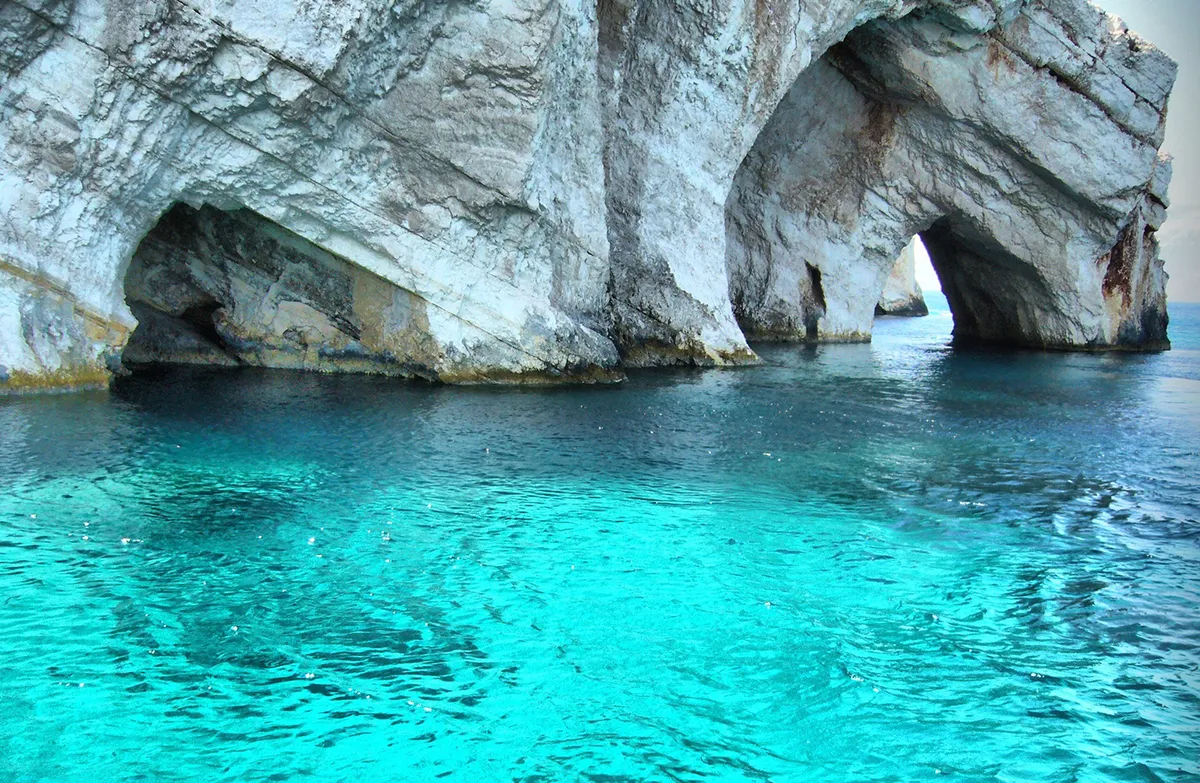
The blue-light effect inside the caves is created by a simple but dramatic optical phenomenon: sunlight enters the cave openings at the waterline, passes through the shallow, crystal-clear water, reflects off the pale limestone seabed, and is then refracted upward into the cave interior. Because water absorbs red and orange wavelengths from the spectrum while transmitting blue, the light that bounces back up through the water is an intense, saturated blue.
The effect is strongest in the Blue Grotto -the largest and most dramatic of the caves -where the arch opening is low and wide, forcing almost all incoming light to pass through water before entering the cave. The result is that the walls, the surface of the water, and anyone swimming inside are bathed in an otherworldly blue glow that changes intensity as clouds pass overhead or as the sun angle shifts.
This is the same optical principle as the famous Blue Grotto of Capri, but Zakynthos's caves are accessible by small open boat and allow swimming inside, making the experience considerably more intimate than the Capri version.
How to Visit: Small Boat vs Large Excursion Boat
There are two main ways to visit the Blue Caves. Large excursion boats carry up to 100–150 passengers and depart from Zakynthos town or Laganas. They are inexpensive but cannot enter the caves themselves -passengers view the caves from outside, which significantly limits the blue-light effect. The journey to Cape Skinari from town also takes roughly 90 minutes each way.
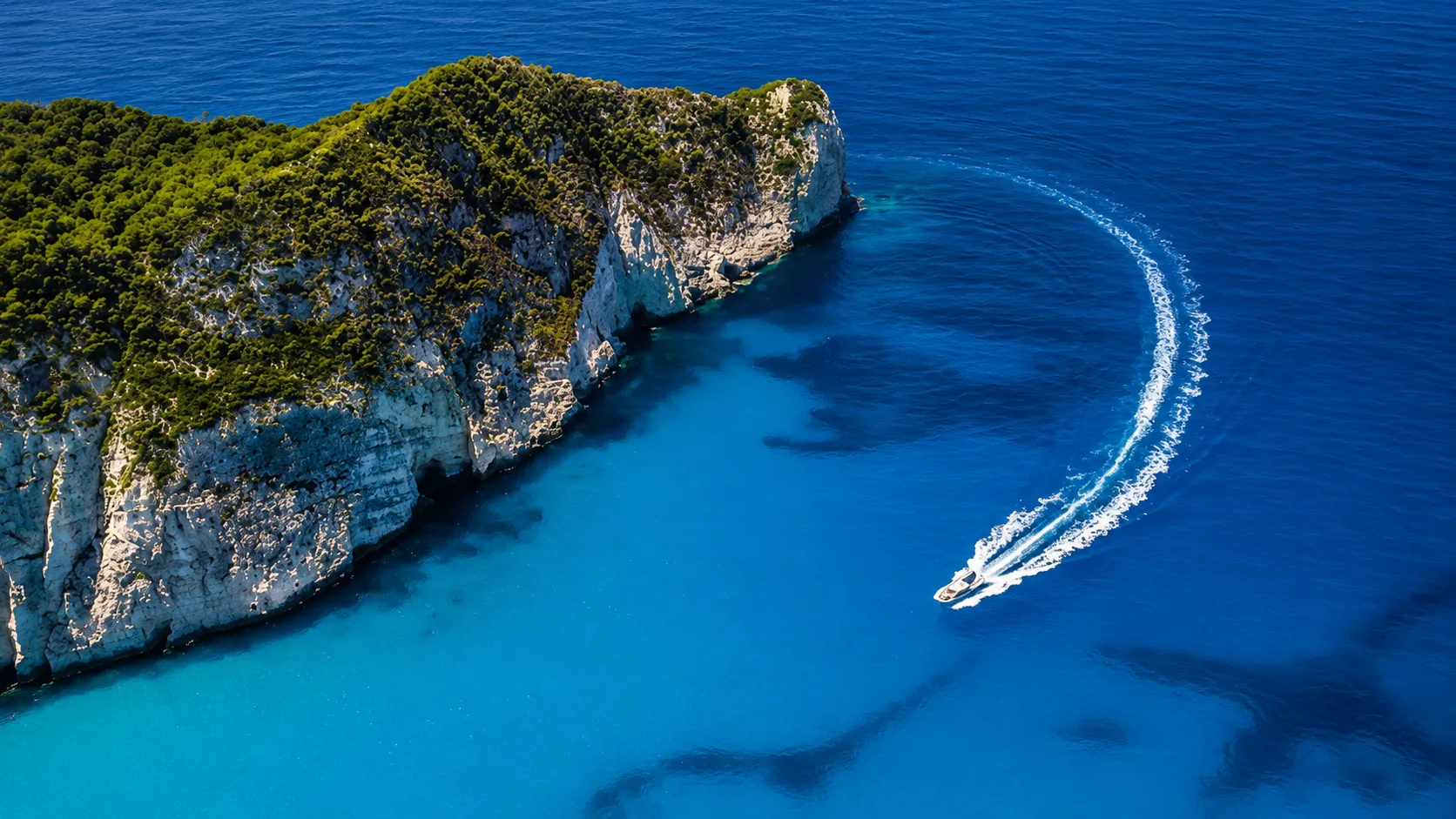
Small boats -those carrying under 12 passengers -can enter the cave arches slowly and allow passengers to slip into the water inside. This is the only way to see the full blue-light effect and to experience the acoustic echo inside the cave chambers. Our Shipwreck & Blue Caves cruise by small boat departs from Agios Nikolaos, just 15 minutes from Cape Skinari, combining the Blue Caves with Navagio in a single morning.
If you want to focus exclusively on the caves and do not need to combine with Navagio, small glass-bottom boats also run from the jetty at Cape Skinari lighthouse. These are shorter trips run by local operators and are excellent value for a focused cave experience.
Best Time of Day for the Blue Effect
Timing is not optional -it is the single most important variable in a Blue Caves visit. The blue-light effect is at its peak between approximately 09:00 and 12:00 in summer, when the sun is high enough to flood the cave openings with direct light but not yet so high that the angle pushes light in from directly above rather than through the water.
Before 09:00, the sun is still low and at an angle that means little light reaches the cave interiors through the water -the effect is muted. After 13:00, the sun moves around the cape and the light enters more directly, bypassing the water and losing the blue refraction. The caves can still be beautiful in the afternoon, but the glow is noticeably weaker.
Overcast days reduce the effect further, since diffuse light has lower intensity than direct sunlight. A partly cloudy morning can still produce good results -the light shifts constantly as clouds pass, and some photographers prefer this dynamic quality to the uniform glow of a perfectly clear day.
Swimming Inside the Blue Caves
Swimming inside the caves is one of the genuine highlights of a Zakynthos visit. The water inside is sheltered, calm, and between 4 and 8 metres deep depending on the cave. The seabed is visible throughout -white limestone with sea urchins along the edges -and the blue light from the refracted sun turns your skin and swimwear a vivid electric blue. The experience is surreal and difficult to photograph accurately because cameras struggle to represent the intensity of the colour with standard settings.
The cave openings are low -in the main Blue Grotto, the arch sits about 1 metre above the waterline -so entry is by water rather than by stepping off the boat. Our skippers position the boat outside the arch, passengers enter the water and swim in through the opening. Life jackets are provided and snorkelling equipment is available. The swim-in distance is typically 5–8 metres. This is suitable for confident swimmers; the depth and enclosed space mean it is not appropriate for non-swimmers or very young children.
There are several named cave formations along Cape Skinari: the main Blue Grotto, the Venetian Caves (slightly shallower arches with strong colour), and a series of smaller caves that are visible from the water but too low to enter. A good skipper will navigate all of them in sequence, pausing at each for photographs.
Photography Tips for the Blue Caves
Standard smartphone cameras often struggle inside the caves because the automatic exposure tries to compensate for the bright opening behind the shot, underexposing the blue interior. Set exposure manually or use the exposure lock feature by tapping on the blue water surface (not the bright entrance) before shooting.
For underwater photography, the blue effect is even more dramatic from below the surface -a snorkelling mask and an underwater camera or phone case will capture the light shafts penetrating from the arch opening in a way that no above-water shot can match. Shoot upward toward the surface for the most dramatic angle.
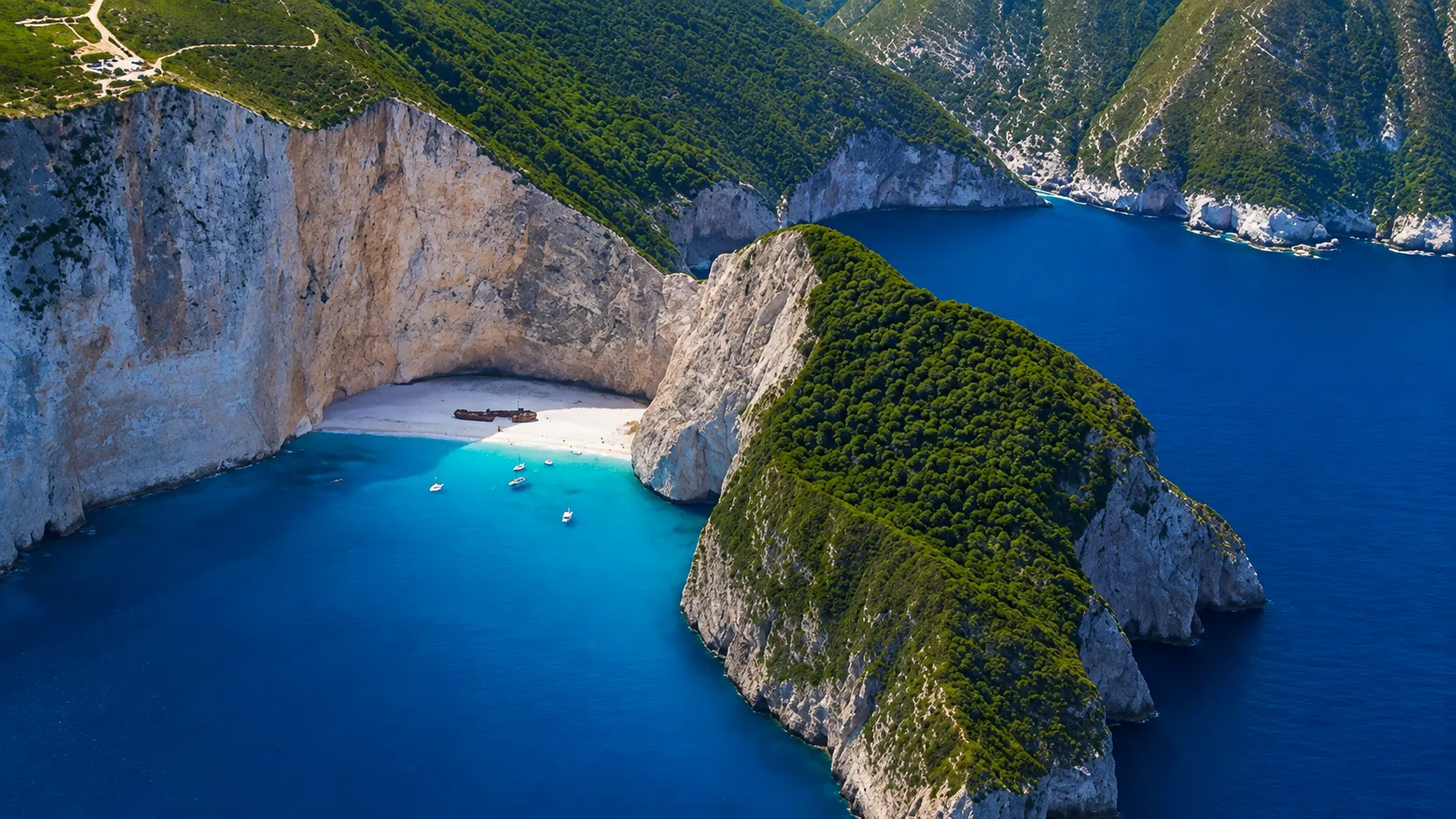
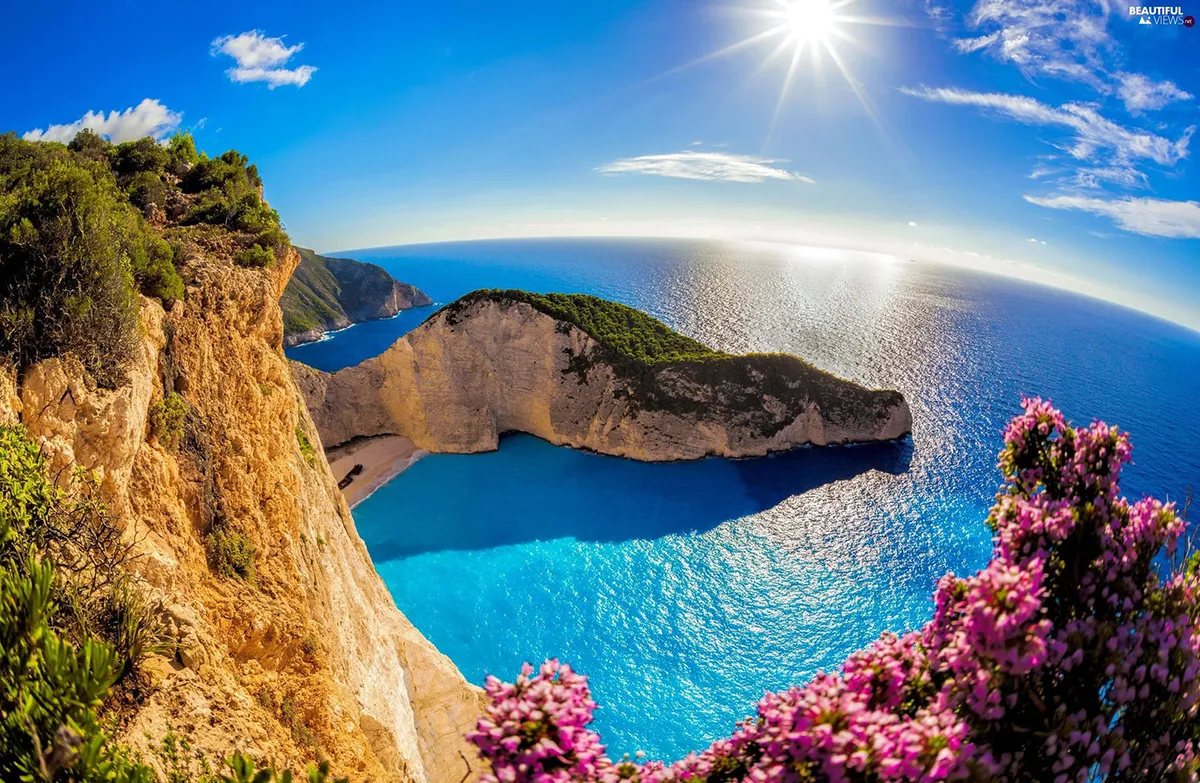
Drone photography is possible from outside the caves but the interior is inaccessible to drones. The best aerial view of the Cape Skinari formation is from above the lighthouse, looking along the coastline toward the cave openings -this shows the geology of the formation and the colour contrast between open sea and the cave water. Visit our Blue Caves destination page for a photo map showing the best vantage points.
What Else to See Near the Blue Caves
Cape Skinari and the north coast of Zakynthos are worth half a day in themselves. The Skinari lighthouse sits at the very tip of the cape on a headland of dramatic eroded limestone, with views across the straits toward Kefalonia. The road from the lighthouse south toward Volimes passes through some of the island's most dramatic cliff scenery.
The village of Volimes, 5 kilometres south, is the centre of the island's honey and lace-making traditions and has a cluster of small family-run shops selling local produce. If you combine a morning Blue Caves boat trip with a drive through Volimes and a stop at the Navagio viewpoint, you have covered the best of the north-west coast in a single day.
Agios Nikolaos, the small port 15 minutes from the lighthouse, is the departure point for our Shipwreck & Blue Caves cruise and has a handful of good tavernas for lunch after a morning on the water.
Practical Information
The caves are accessible from May to mid-October; the season depends on sea conditions. Swells from the north can close the caves on short notice -legitimate operators will refund or reschedule if conditions are unsafe. Water temperature in the caves ranges from around 22°C in June to 26°C in August and September -warm enough that a wetsuit is not needed for the short swim.
There is no entrance fee for the caves themselves; you pay for the boat trip that brings you there. Large excursion boats cost significantly less than small-boat tours but offer the external view only. The premium for a small-boat trip that allows cave entry and swimming is worth paying for anyone making the journey specifically for the Blue Caves experience. See our Blue Caves destination page for current tour pricing and departure times.